Why ETPs Need Automation
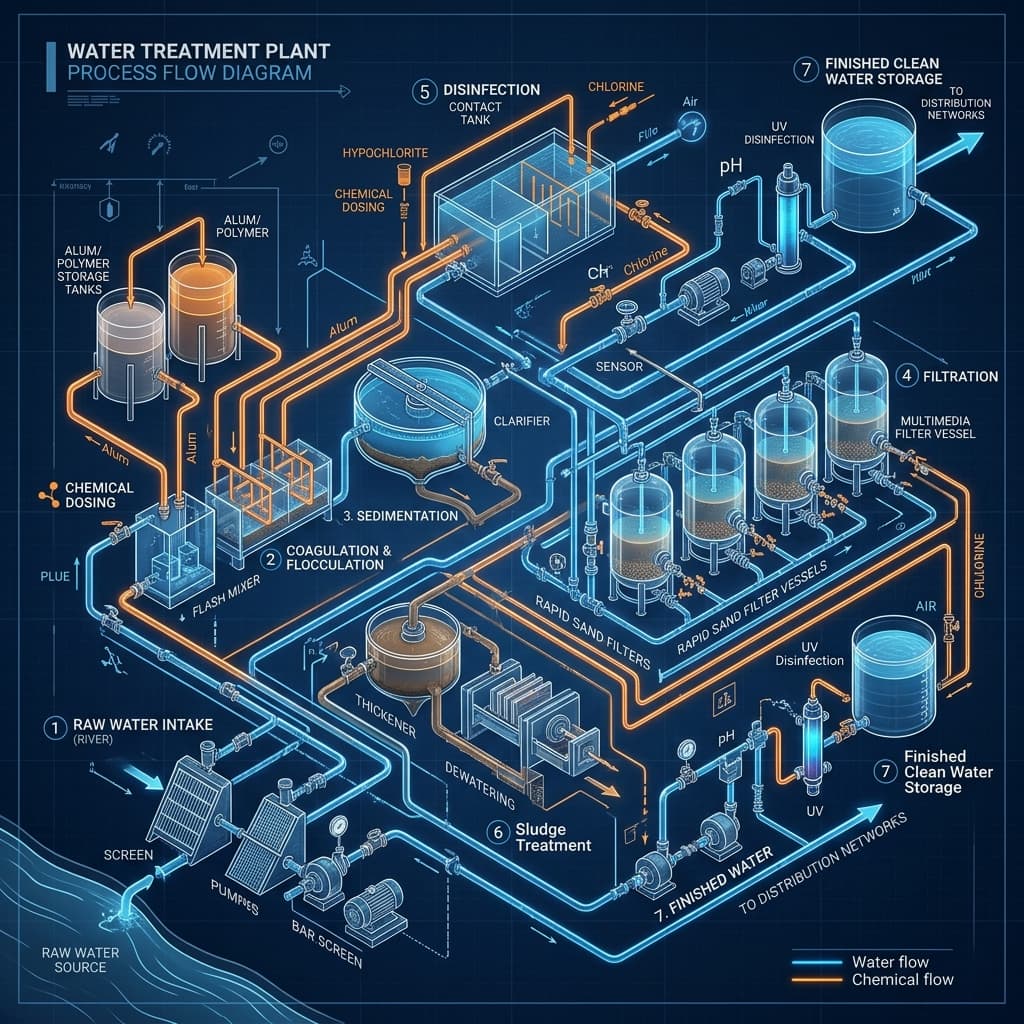
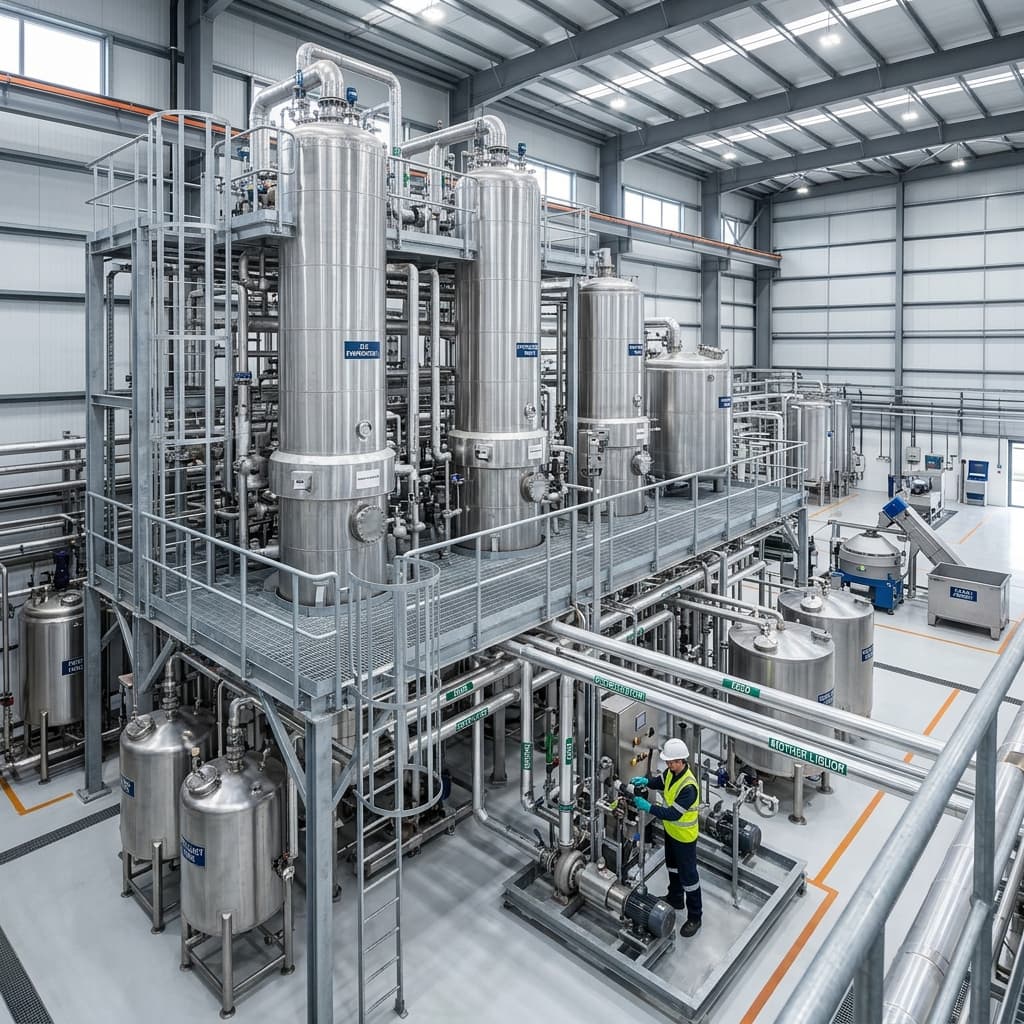
An Effluent Treatment Plant (ETP) that relies on manual operation is a compliance risk. Chemical dosing rates must be adjusted in real time as influent quality changes; filter press cycles must be sequenced correctly; pH must be held within discharge limits at all times. A single missed manual intervention can result in an exceedance event and regulatory action. Programmed Logic Controller (PLC) automation eliminates these risks by replacing manual sequences with verified, repeatable logic that runs 24 hours a day.
The Role of a PLC in an ETP
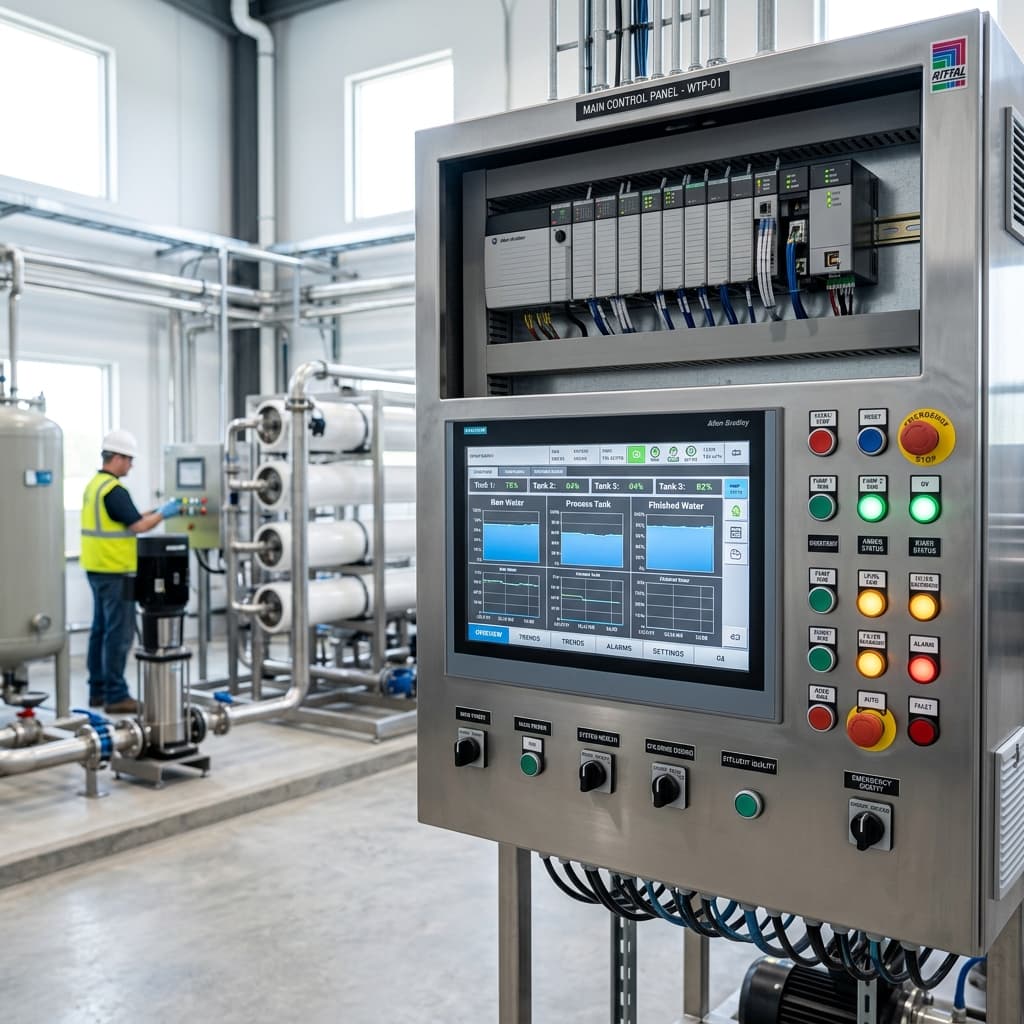
A PLC is the brain of an automated ETP. It reads inputs from field instruments — flow transmitters, pH sensors, level switches, turbidity probes — and uses programmed logic to drive outputs: chemical dosing pumps, pneumatic valves, blowers, and agitators. The logic handles start/stop sequences, interlock conditions (such as preventing a pump from running dry), alarm management, and process control loops (such as flow-proportional chemical dosing). Siemens S7-300 and S7-1200 series PLCs are commonly used for ETP automation due to their reliability and the wide availability of trained engineers.
Pneumatic Control Valves in ETP Sequences
Pneumatic control valves are used throughout an ETP wherever automated flow diversion or modulating control is required. Common applications include: sludge transfer to the filter press, recycle stream control, chemical dosing isolation, and inlet equalization flow control. Pneumatic actuators offer fast response, fail-safe behaviour (normally open or normally closed on air failure), and high cycle life — making them preferable to electric actuators in wet, corrosive ETP environments. The PLC drives solenoid valves that control the pneumatic actuators, creating a fully integrated control loop.
What a PLC Automation Package Includes
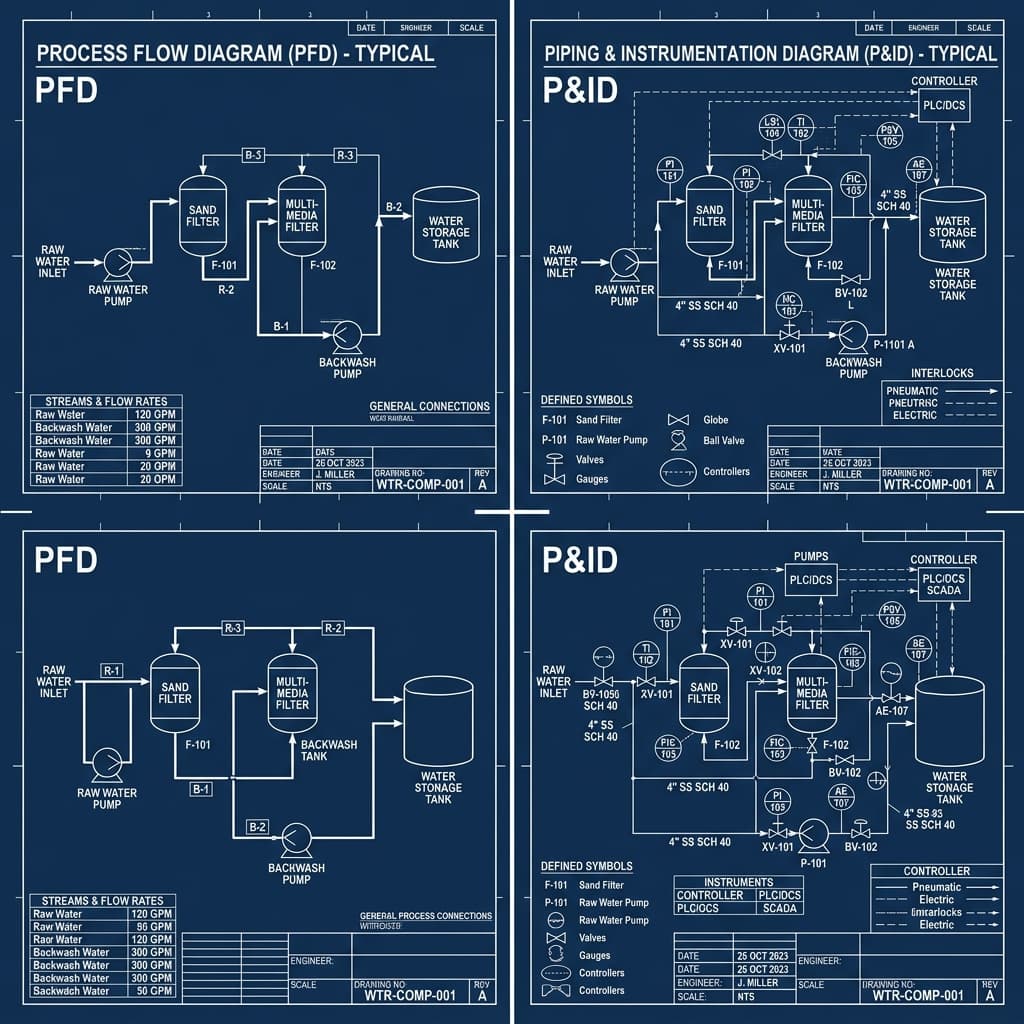
A complete PLC automation design package for an ETP includes: (1) I/O list — all field instruments and final control elements with tag numbers and signal types; (2) PLC logic documentation — function block descriptions covering each sequence, control loop, and interlock; (3) SCADA integration point list — OPC or Modbus tags mapped to the HMI/SCADA system; (4) Pneumatic schematic — valve type, actuator specification, and solenoid wiring for each pneumatic device; (5) Control system description — narrative description of how each sequence operates, for use by operations staff.
SMRS Infra's ETP Automation Engineering Service
SMRS Infra designs PLC automation systems for new ETPs and upgrades existing PLC logic for plants experiencing control issues. We are platform-agnostic but have deep experience with Siemens S7 series PLCs and the associated TIA Portal programming environment. Our deliverables are engineering documents — logic descriptions, I/O lists, and schematics — that can be implemented by your system integrator or PLC programmer directly. We also provide review and validation of third-party PLC programs for compliance with your process requirements.
Need engineering support for your project?
SMRS Infra provides process design calculations, P&ID packages, and PLC automation engineering for water and wastewater treatment plants.
Get in Touch