What is Zero Liquid Discharge?
Zero Liquid Discharge (ZLD) is a wastewater treatment strategy in which no liquid effluent is discharged from a facility to the environment. Every litre of wastewater generated by the process is treated, concentrated, and ultimately converted into a dry solid (salt cake or crystallised solids) that can be safely disposed of or reused. The treated water recovered through the ZLD process is recycled back into the facility, reducing freshwater consumption to near zero.
How a ZLD System Works
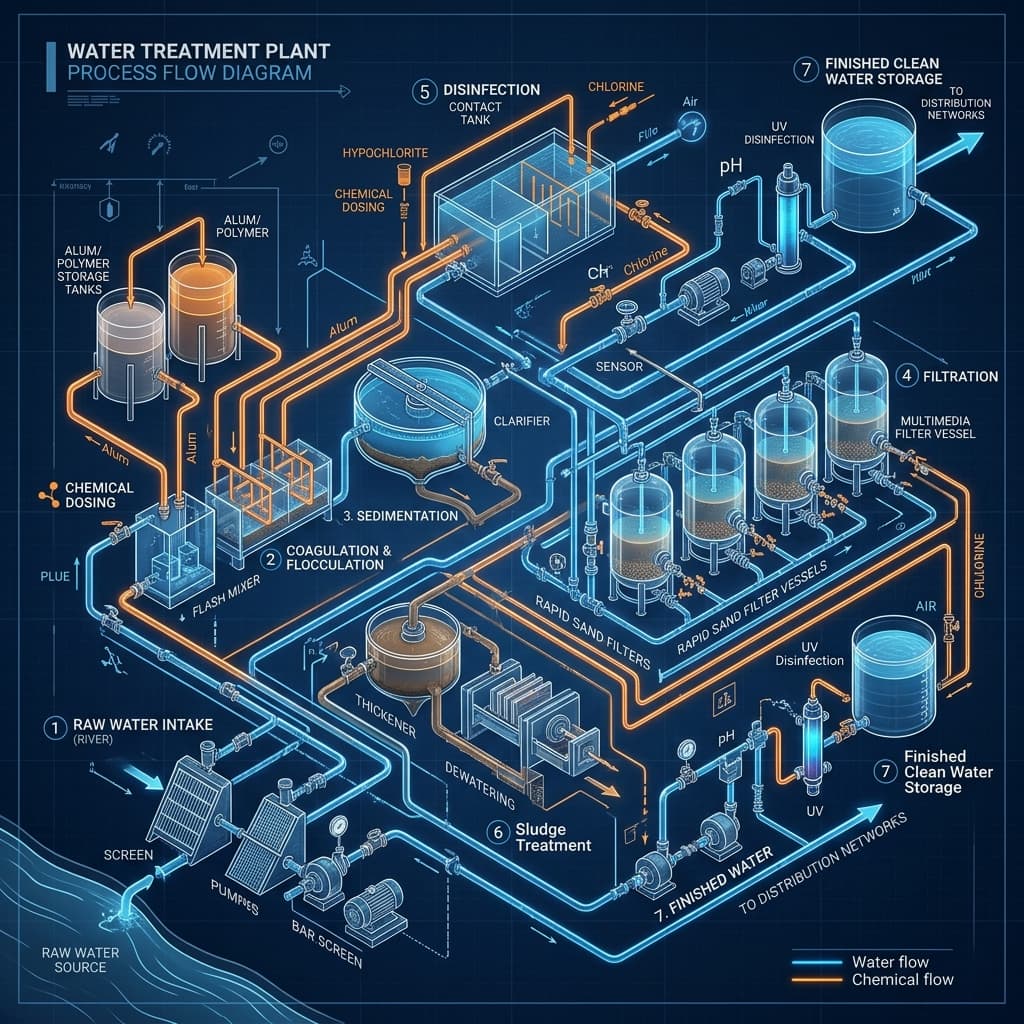
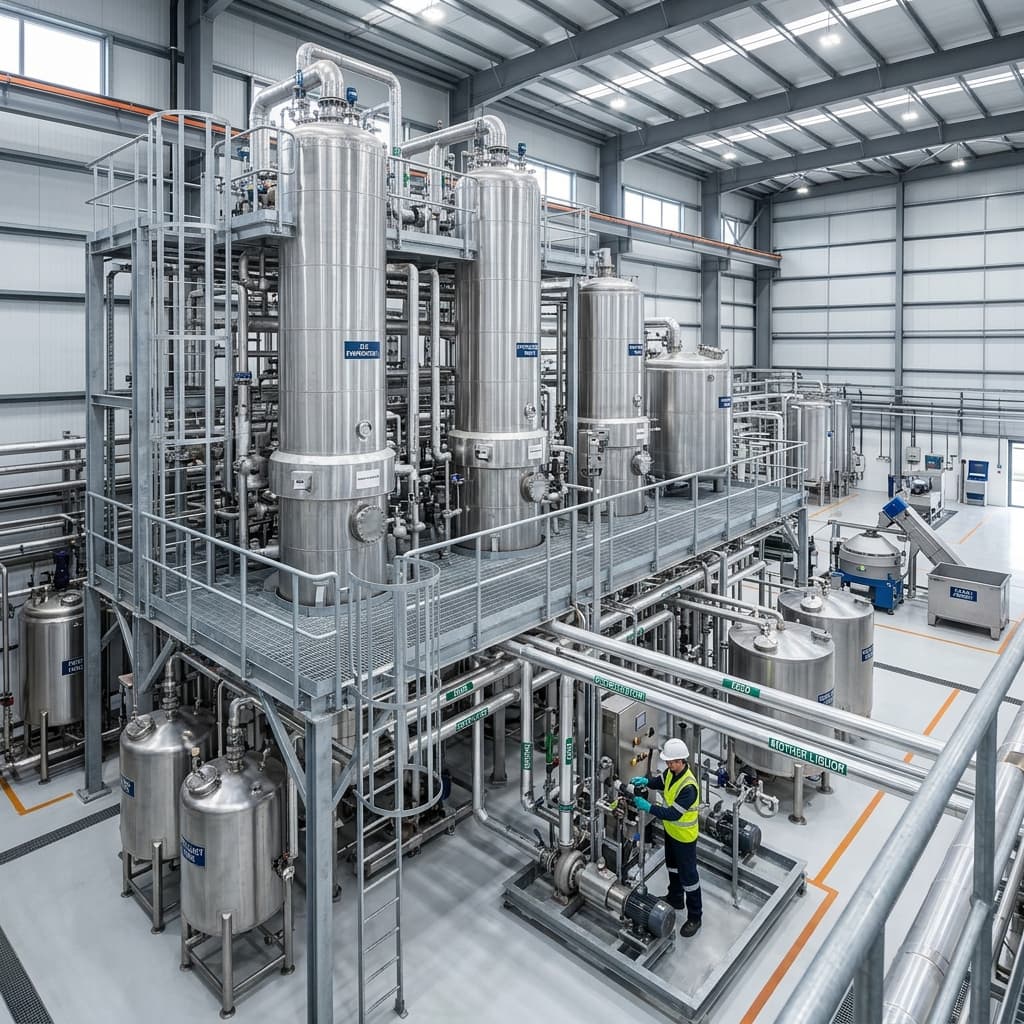
A ZLD system typically consists of several treatment stages: (1) Pre-treatment — removal of suspended solids, oil, and biological oxygen demand through screening, clarification, and biological treatment; (2) Membrane concentration — ultrafiltration (UF) followed by reverse osmosis (RO) to recover 70–80% of the water as clean permeate; (3) Thermal concentration — a Multi-Effect Evaporator (MEE) or Mechanical Vapour Recompression (MVR) unit further concentrates the RO reject; (4) Crystallisation — the concentrated brine is dried into a salt cake in a forced-circulation crystalliser. The recovered water at each stage is recycled back to the process.
Industries That Require ZLD
ZLD is mandated by environmental regulations in several industries in India and internationally. The Central Pollution Control Board (CPCB) in India requires ZLD for textile dyeing and printing units, pharmaceutical manufacturers, tanneries, distilleries, and pulp and paper mills. Power plants, fertiliser manufacturers, and petrochemical facilities also frequently implement ZLD systems to comply with state pollution control board (SPCB) norms. Beyond compliance, ZLD is also adopted by industries in water-scarce regions as a water security strategy.
Engineering Challenges in ZLD Design
Designing a ZLD system is significantly more complex than designing a conventional ETP. The inter-dependency between biological treatment performance, RO recovery rates, and evaporator sizing means that the process must be modelled holistically. Key engineering challenges include: scaling and fouling in RO membranes (requiring careful antiscalant selection and pre-treatment design), heat integration across the MEE to minimise steam consumption, and crystalliser sizing for correct salt yield. A poorly designed ZLD system results in high operational costs and frequent downtime.
What SMRS Infra Delivers for ZLD Projects
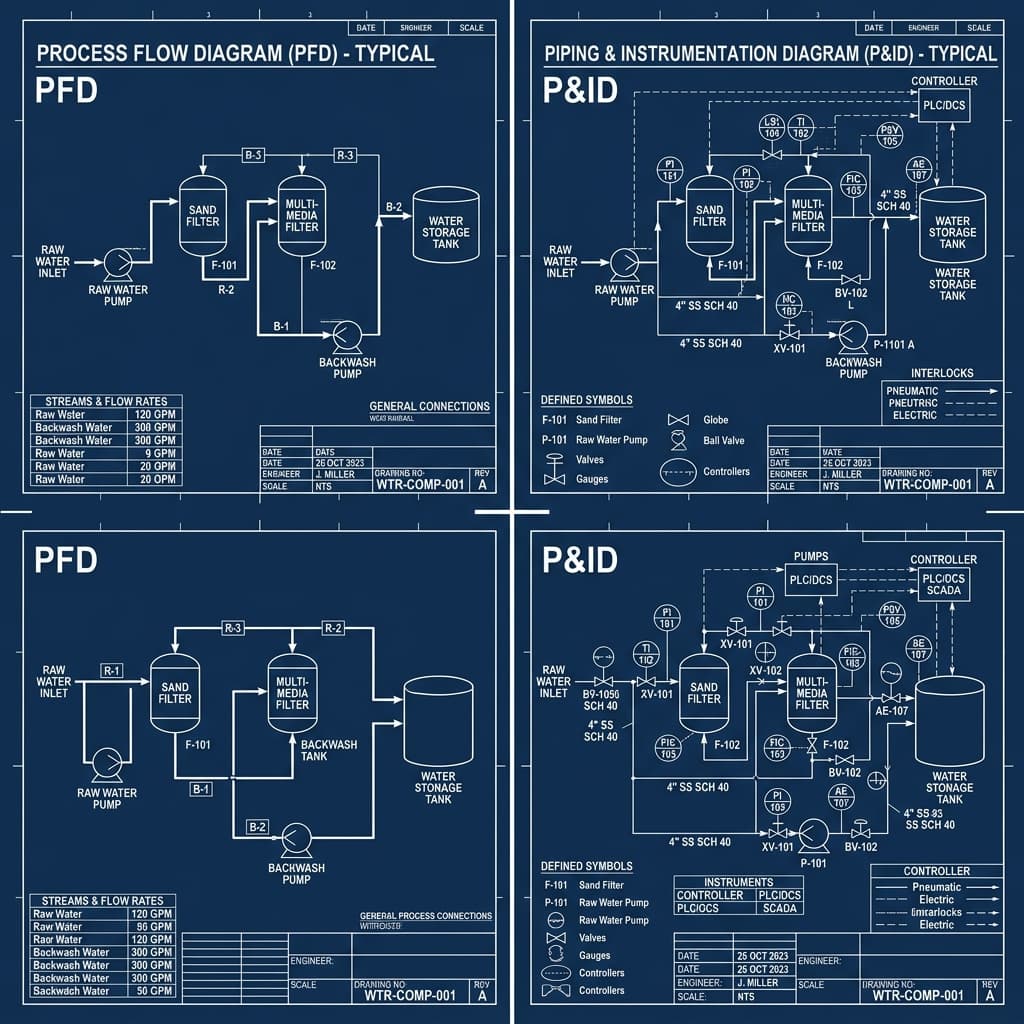
SMRS Infra provides complete process engineering for ZLD systems: technology selection (MEE vs MVR, crystalliser type), mass and energy balance calculations, process design calculations for each treatment stage, PFD, and a complete P&ID package. Our P&ID packages cover all unit operations from inlet screening to the crystalliser, including all instrument tags, control loops, and utility tie-in points. We deliver ZLD engineering packages suitable for direct use in EPC procurement and construction.
Need engineering support for your project?
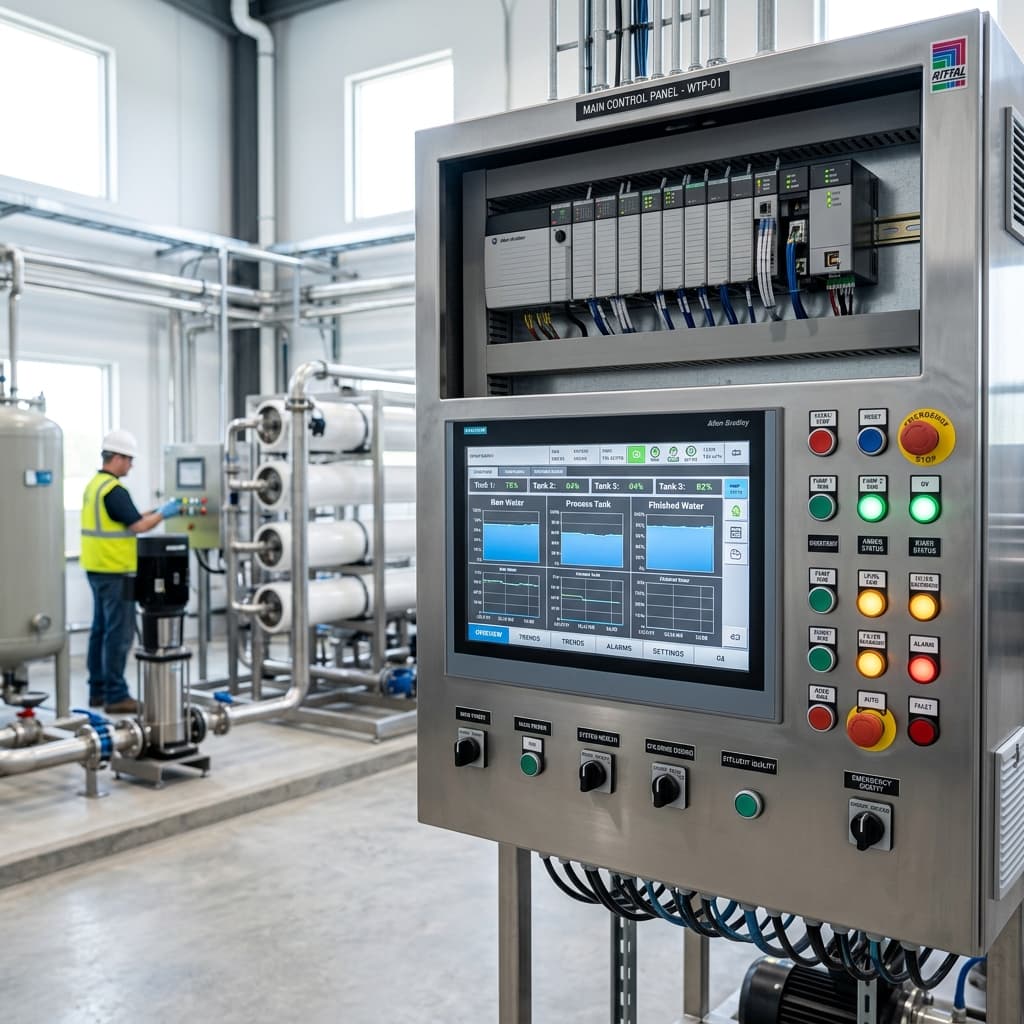
SMRS Infra provides process design calculations, P&ID packages, and PLC automation engineering for water and wastewater treatment plants.
Get in Touch